
Home / All / Variable speed Scroll Air-CooledModular Units—FAQ / What are the main features of a modular design?
What are the main features of a modular design?
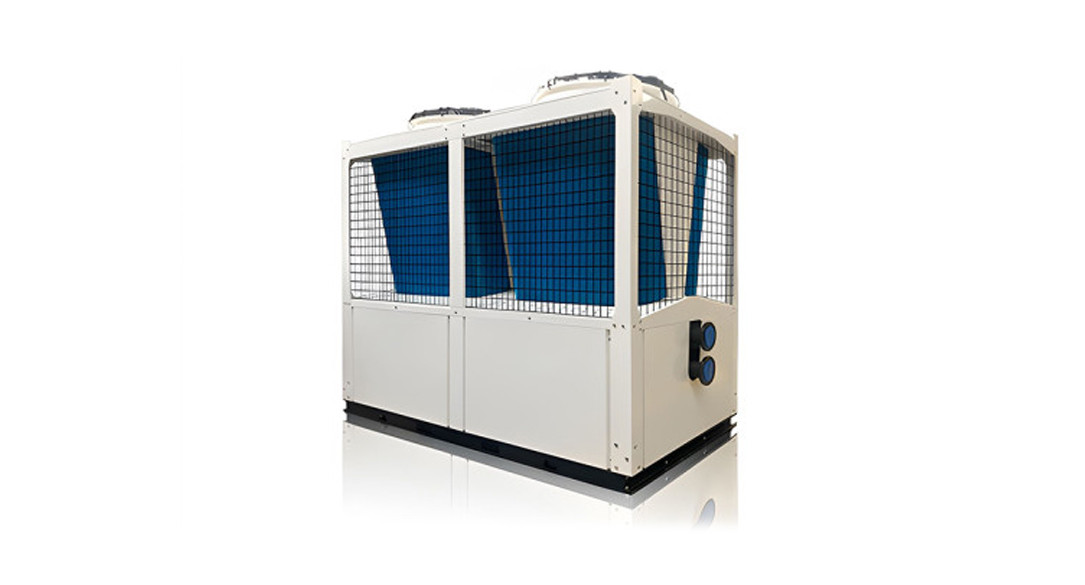
A modular design in air-cooled chiller systems refers to a structure in which multiple independent refrigeration modules are combined to form a larger, integrated cooling system. Each module operates as a complete refrigeration unit with its own compressor, heat exchanger, fan system, and control logic. This architecture brings several distinctive advantages that make modular chillers highly flexible, scalable, reliable, and energy-efficient for commercial and industrial applications.
One of the most significant features is scalability. Users can start with a small initial capacity and gradually increase total system output by adding more modules as cooling demand grows. This incremental investment reduces upfront cost pressure and ensures the system can adapt to future expansion without replacing existing equipment.
Another key feature is redundancy and reliability. Because each module operates independently, the failure of one module will not shut down the entire system. Remaining modules continue functioning, ensuring uninterrupted cooling. This redundancy is especially important in data centers, manufacturing processes, laboratories, or any environment requiring continuous cooling.
Modular systems also excel in energy efficiency. With multiple compressors operating in stages, the unit can match output to actual load conditions with high precision. This avoids excessive on/off cycling and significantly improves partial-load performance. When combined with variable-speed scroll or screw compressors, modular systems can achieve even greater seasonal energy efficiency ratios.
Installation flexibility is another defining characteristic. Modules are compact, lightweight, and can be transported, lifted, and assembled easily on roofs, equipment yards, or indoor machinery rooms with limited access. Different configurations—parallel placement, L-shaped, back-to-back—allow adaptation to space constraints.
In terms of control, modular systems feature advanced intelligent networking. Through master-slave or distributed control logic, each module communicates with others to coordinate capacity output, fault detection, load balancing, and efficiency optimization. Modern systems allow centralized BMS integration and remote monitoring.
Finally, modular chillers simplify maintenance. Technicians can service a single module while others remain operational, reducing downtime. Components are standardized, and the modular layout means easier replacements and upgrades.
FAQs
- Integrated Water-Cooled Chiller | Compact Central HVAC Cooling Unit - FAQ
- Integrated Low-Temperature Heating Modular Unit | Integrated Air Source Heat Pump-FAQ
- Falling Film / Flooded Water-Cooled Chiller – FAQ
- Water-Cooled Centrifugal Chiller | High-Capacity HVAC Cooling System – FAQ
- Water-Cooled Screw Chiller | Central HVAC Cooling Solution – FAQ
- Screw Type Air-Cooled Chiller & Heat Pump Unit – FAQ
- Variable speed Scroll Air-CooledModular Units—FAQ
- Natural Cooling Air-Cooled Screw Chiller – FAQ
- Modular Air-Cooled Cold (Hot) Water Unit – FAQ
- Air-Cooled Chiller Unit – FAQ
- Air Filter FAQ
- Installation & After-sales
- Maintenance & Care
- Procurement & Order
- Product Performance & Advantages
- System Operation & Troubleshooting
- Technical Documents & Support
- Product Customization & Applications
Looking for a trusted HVAC manufacturer for your business needs?
We can quickly provide customers with market analysis, technical support and customized services.
Contact Person
