
Understanding Cooling Towers: How They Work and Why They Matter in Modern HVAC Systems
Cooling towers are an indispensable component of modern HVAC and industrial cooling systems. They efficiently dissipate heat, protect equipment from thermal stress, and ensure the stable operation of commercial buildings, factories, data centers, and energy facilities. With the ever-increasing global demand for cooling, understanding the working principles and importance of cooling towers is more crucial than ever.
In this article, we will delve into the technical principles behind cooling towers, explain their operating mechanisms, introduce different types of cooling towers, and highlight the numerous advantages they bring to today's HVAC systems.
What Is a Cooling Tower?
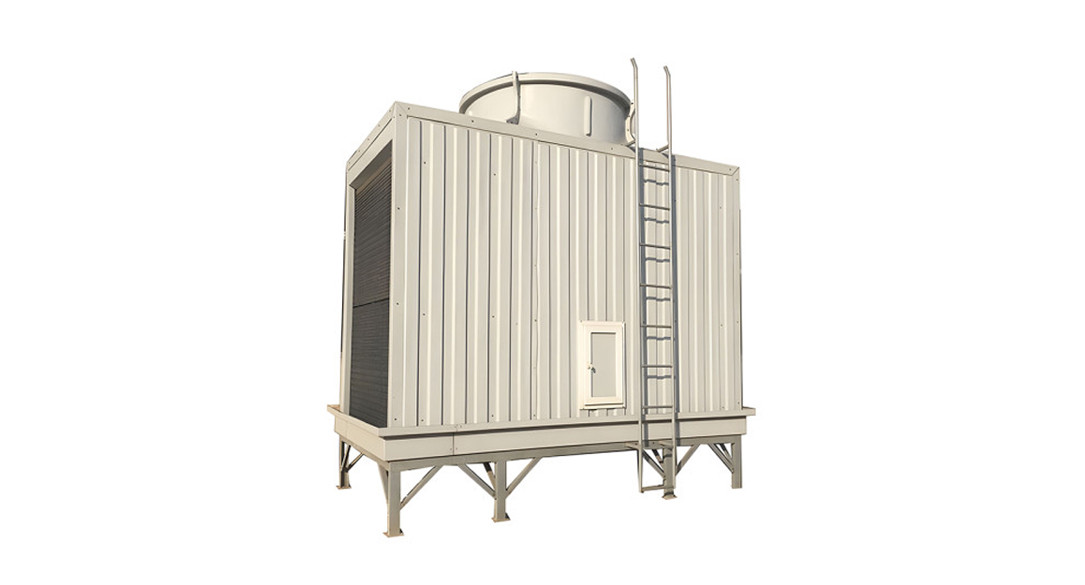
A cooling tower is a specialized heat dissipation device that removes excess heat generated by buildings or industrial processes by transferring it to the atmosphere. Unlike mechanical refrigeration, which consumes a significant amount of energy, cooling towers efficiently lower water temperature using the principle of evaporative cooling.
Cooling towers are widely used in:
● Central air conditioning and chilled water systems
● Manufacturing and industrial process cooling
● Power plants
● Data centers and IT equipment cooling
● Chemical and petrochemical industries
How a Cooling Tower Works
Although designs vary, almost all cooling towers follow the same core principle: evaporation removes heat.
1. Hot Water Enters the Cooling Tower
Hot water from chillers, condensers, or industrial equipment is pumped into the cooling tower.
2. Water is Distributed Over the Fill Material
The water is sprayed or distributed over the fill material, maximizing the surface area of contact between the water and air, thus increasing heat exchange efficiency.
3. Airflow Promotes Evaporation
Air flows through the cooling tower either by natural convection or with the help of mechanical fans.
● When the air comes into contact with the hot water, a small portion of the water evaporates.
● The evaporation process removes heat, thus cooling the remaining water.
4. Cooled Water Returns to the System
The cooled water collects in a basin and is then pumped back into the building or process circulation system to absorb more heat, completing the cycle.
This simple yet efficient mechanism allows cooling towers to achieve efficient heat dissipation with significantly reduced energy consumption.
Types of Cooling Towers
Cooling towers come in several designs, each suited for different applications and operational needs.
1. Mechanical Draft Cooling Towers
These cooling towers use fans to move air through the tower.
● Forced draft ventilation: Fans blow air into the tower.
● Induced draft ventilation: Fans draw air upwards and out of the tower (most common and most energy-efficient).
Advantages:
✔ Controllable airflow
✔ High heat dissipation performance
✔ Suitable for commercial and industrial HVAC systems
2. Natural Draft Cooling Towers
These large, hyperbolic towers rely on natural air convection instead of mechanical fans.
Advantages:
✔ Low operating costs
✔ Long operational life
✔ Suitable for large-scale facilities, such as power stations
3. Crossflow vs. Counterflow Towers
Crossflow Cooling Towers
Air moves horizontally across the falling water.
✔ Easy maintenance
✔ Low fan power requirements
Counterflow Cooling Towers
Air moves vertically upward while water flows downward.
✔ Higher thermal efficiency
✔ More compact design
Why Cooling Towers Matter in Modern HVAC Systems
Cooling towers do more than just lower water temperature—they also deliver significant operational, economic, and environmental benefits.
1. Energy Efficiency
Evaporative cooling significantly reduces the load on chillers and compressors, improving overall system efficiency and lowering energy costs.
2. Enhanced System Performance
Maintaining a stable water temperature helps chillers, condensers, and process equipment operate at optimal levels.
3. Extended Equipment Lifespan
By preventing overheating, cooling towers reduce mechanical stress and extend the lifespan of expensive HVAC components.
4. Reduced Operating Costs
Efficient cooling towers reduce energy consumption, water usage, and maintenance costs over the long term.
5. Environmental Benefits
Modern cooling towers incorporate technologies such as:
● High-efficiency drift eliminators
● Water-saving designs
● Corrosion-resistant materials
These technologies collectively reduce the environmental impact.
Key Considerations When Choosing a Cooling Tower
Selecting the right cooling tower is essential for long-term performance and cost efficiency. Important factors include:
● Cooling capacity and heat load
● Local climate and ambient wet-bulb temperature
● Material selection (FRP, galvanized steel, stainless steel, hybrid)
● Energy efficiency features such as VFDs
● Ease of maintenance and service access
● Noise level requirements for urban or sensitive locations
High-quality cooling towers—like the solutions offered by Aurashu—are engineered to meet demanding commercial and industrial conditions with long-lasting performance.
Conclusion
Cooling towers remain one of the most efficient and energy-saving heat rejection technologies in modern HVAC and industrial systems. They are indispensable in many industries because they improve system performance, reduce energy costs, and extend equipment lifespan.
Understanding how cooling towers work and the factors that affect their efficiency helps facility managers, engineers, and owners make informed decisions when designing or upgrading systems.
If you are looking for a reliable and efficient cooling tower solution, Aurashu offers durable and customizable products designed specifically for modern commercial and industrial applications.